
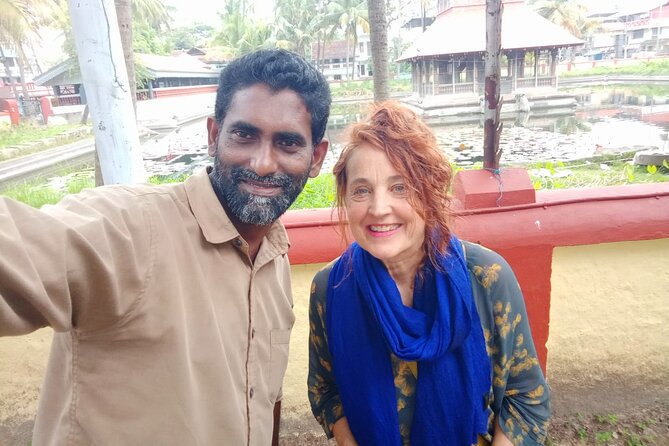
Reviewed · KOCHI TUK-TUK SIGHTSEEING TOURS
Kochi Tuk-Tuk Tour with Pickup From Cruise Ships
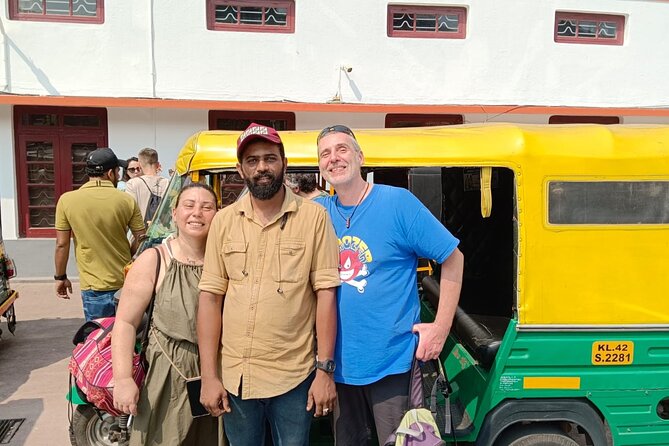
One ride in a tuk-tuk, and Fort Kochi makes sense fast. I like that this tour is built for cruise-ship timing with a smooth pickup and drop-off at the port, and I also love the easy photo setup that comes with using the tuk-tuk. The one consideration: it’s not an all-day outing, and some stops are more about quick viewing than long hangs.
What you’re really buying here is a guided loop through Kochi’s oldest layers, paced so you can see a lot without feeling dragged. You’ll hop from the iconic harbor-side spots (like the Chinese Fishing Nets) to landmark churches and synagogues, then finish in the marketplace and temples—each stop timed so you can keep moving. And yes, you should plan for a bit of walking at several points, since you’re getting out to look around even though the ride is private.
In This Review
- Key highlights worth knowing before you go
- Cruise-port pickup in a tuk-tuk: why timing matters
- What 4 to 5 hours feels like on the ground
- Fort Kochi stop-by-stop: what you’ll actually see
- Chinese Fishing Nets (Cheena vala): the harbor icon first
- Dutch Cemetery: quiet history with legible names
- Church of Saint Francis: early European architecture in India
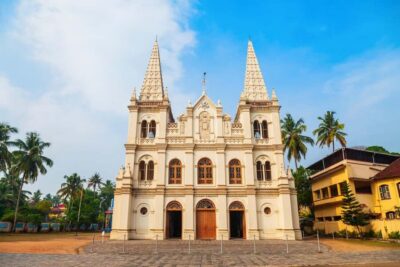
- Santa Cruz Cathedral Basilica: a bigger landmark close by
- Dhoby Khana laundry stop: where everyday life interrupts the monuments
- Bastion Bunglow: a sea-facing Dutch-era structure
- Mattancherry Palace and Paradesi Synagogue: the story shifts west and east
- Mattancherry Palace (Portuguese/Dutch Palace): murals and portraits
- Paradesi Synagogue: old synagogue with a still-living role
- Cochin Spice Market: practical shopping time, not a walk-through trap
- Jain Temple and the daily noon rhythm
- Cochin Thirumala Devaswom Temple: a big socio-religious institution
- Value check: what $15 buys you and what it doesn’t
- Who this tour suits best (and who should choose differently)
- Should you book this Kochi tuk-tuk tour?
- FAQ
- What is the duration of the Kochi tuk-tuk tour?
- Where does the tour start and end?
- Is pickup offered from cruise ships?
- Is this tour private?
- What’s included in the price?
- What is not included?
- Does the tour use a mobile ticket?
- What’s the best time to visit based on operating hours?
- What if weather is poor?
- What is the cancellation window for a full refund?
Key highlights worth knowing before you go
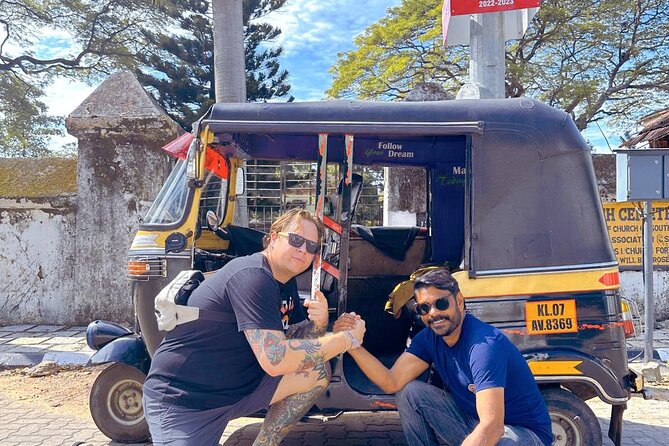
- Cruise-port pickup and return that keeps the day stress-free
- Tuk-tuk photo help so you’re not stuck asking strangers for pictures
- Site admission included for the listed stops on the route
- Fort Kochi + Mattancherry mix: churches, cemeteries, palace murals, and faith sites
- Cold drinks on board including bottled water and fresh coconut water
Cruise-port pickup in a tuk-tuk: why timing matters
If you’re docking in Kochi, time is the real currency. This tour starts at the Cochin Port Authority near Willingdon Island, and you’re brought back to the same meeting point after about 4 to 5 hours. That matters because Fort Kochi can eat up time if you’re trying to figure out transport on your own.
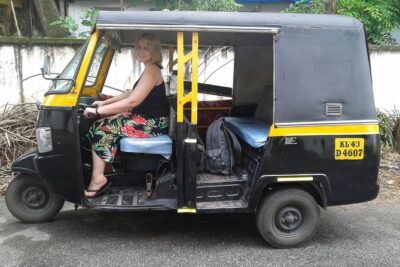
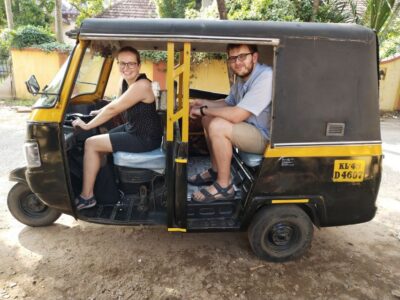
The tuk-tuk itself is the right vehicle for this kind of route. It’s compact, it’s open-air, and it lets you get views and angles you’d miss from a bigger car. It also keeps your day feeling like a local day out, not a rushed checklist in a van.
What 4 to 5 hours feels like on the ground
The schedule is structured as a series of short stops, each around 20 minutes. That doesn’t mean you’ll feel cut off—it means you’ll spend less time waiting and more time moving through scenes that define old Kochi. The operator also adds bottled water, and you get fresh coconut water, which is a practical win in Kerala heat and humidity.
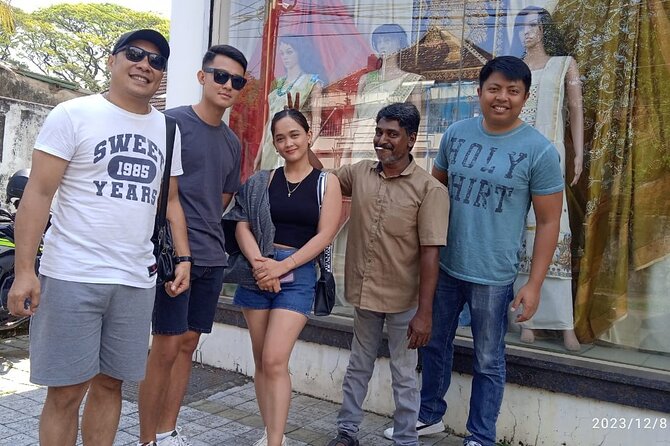
Your guide-driver experience also changes the feel of the day. In the feedback I saw, guides like Shaiju Najeeb, Shoib, Tanzi, Shuhaib, and Thansi come up often, and the common thread is that they’re polite, prompt, and comfortable speaking English. If you’re the type who likes explanation as you go, this kind of driver-guide setup is a strong fit.
One more thing: the tour is listed as private, meaning it’s just your group in the vehicle. That usually gives you more flexibility to ask quick questions and get better photo stops without a big crowd moving you along.
More of the city by auto-rickshaw, weaving from the harbour front to the old quarters.



Fort Kochi stop-by-stop: what you’ll actually see
This route centers on Fort Kochi and the surrounding heritage core. You’ll start with the harbor-side landmark, then move inland through colonial-era landmarks, churches, and public life scenes.
Chinese Fishing Nets (Cheena vala): the harbor icon first
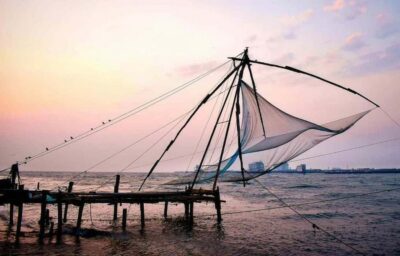
The day opens at the Chinese Fishing Nets, a stationary lift net installation fixed along the shore. Even if you’re not a fishing-gear nerd, the nets are a visual anchor for Kochi—part engineering, part tradition, part postcard icon.
The short visit works here because the point is perspective. You get to see how the nets sit in the water and how the coastline looks around them, which sets the tone for the rest of the old-city walk.
More shore excursions timed to the Cochin cruise terminal, back before the ship sails.
- Kochi Sightseeing Tuk-Tuk Tour with Pickup From Cruise Ships
★ 5.0 · 194 reviews - Kochi Tuk-Tuk Sightseeing Tour with Cruise Ship Pickup
★ 5.0 · 190 reviews - Kochi Tuk-Tuk Private Tours with Pickup from Cruise Ships
★ 5.0 · 181 reviews - Kochi Tuk-Tuk Tour with Pickup From Cruise Ships
★ 5.0 · 155 reviews - Tuk Tuk Kochi Tours with pickup from Cruise Ship
★ 5.0 · 151 reviews - Exclusive Kochi Tuk Tuk Tour Including Pickup from Cruise Ships
★ 5.0 · 113 reviews
Dutch Cemetery: quiet history with legible names
Next comes the Dutch Cemetery, known in Fort Kochi for imperial-era residents who left their homelands centuries ago. A cemetery isn’t everyone’s idea of fun, but this stop is valuable because it’s a clear marker of Kochi’s European connections in a way you can’t get from a museum.
The 20-minute timing is about getting your bearings: look at the setting, notice the atmosphere, and move on before it turns into a slog. If you prefer active exploration over quiet contemplation, this is still manageable.
Church of Saint Francis: early European architecture in India
Then you’ll reach St. Francis Church in Fort Kochi, originally built in 1503. It’s framed as one of the oldest European churches in India, and it’s often treated like a historical anchor for the Fort Kochi area.
What to watch for: the way the church fits the streets around it, and the details that show how older architecture holds its meaning centuries later. Since your time is limited, aim to do a quick exterior-to-interior sweep (if open) and then take in the setting.
Santa Cruz Cathedral Basilica: a bigger landmark close by
From there you move to Santa Cruz Cathedral Basilica at Fort Kochi, listed as one of the eight basilicas in Kerala. This is the kind of stop where the scale and presence feel stronger than at smaller churches.
In practice, the best way to enjoy a basilica in limited time is simple: look first, then zoom in. Give yourself a couple minutes for the overall impression, then spend the rest on specific details you can photograph without rushing.
Dhoby Khana laundry stop: where everyday life interrupts the monuments
After churches, you’ll get a very different scene at Dhoby Khana Public Laundry, founded in the early 1700s as a community washing location. The description emphasizes that laundry was historically handled at a central place, and that’s exactly what makes this stop interesting: it’s not a relic you only look at. It’s a working-feeling sight.
Even if you don’t see the full process at your exact moment, you’ll still understand the idea of communal service spaces in Kochi. This is the one stop that most helps you connect the heritage buildings to real daily life.
Bastion Bunglow: a sea-facing Dutch-era structure
Next is Bastion Bunglow near Vasco da Gama Square. It’s described as a sea-facing Dutch heritage structure built in 1667, which makes it another colonial-era footprint in the Fort Kochi area.
This stop is short, so treat it like a photo-and-context moment. Get the structure in view, notice its relationship to the square and sea, then roll on while your energy is still good.
Mattancherry Palace and Paradesi Synagogue: the story shifts west and east
As you move toward Mattancherry, the feel of the architecture and the cultural timeline shifts. This is where you start seeing how Kochi’s identity grew through trade and contact.
Mattancherry Palace (Portuguese/Dutch Palace): murals and portraits
The next major stop is Mattancherry Palace, also known as the Dutch Palace, with Portuguese ties. What stands out in the description is that it’s known for Kerala murals with portraits and exhibits related to the rajas of Kochi.
This is the place to slow down for a moment—even with a short stop—because murals are visual storytelling. If you want photos, pick one main panel or scene to focus on rather than trying to capture everything. You’ll leave with stronger memories that way.
Paradesi Synagogue: old synagogue with a still-living role
Then you visit Paradesi Synagogue, described as the oldest active synagogue in the Commonwealth of Nations and constructed in 1568. It’s framed as a historic Jewish community site in Kochi, and it’s emphasized as still active.
In limited time, the best approach is respectful observation. Take a moment to understand the space, then use the time you have to look at the elements that reflect its age and ongoing life. This is one of the stops that feels most “real” because it’s not just a building you pass—it’s presented as functioning.
Cochin Spice Market: practical shopping time, not a walk-through trap
Next up is the Cochin Spice Market, described as a down-to-earth shop with polished displays selling exotic spices in bulk. This is a classic Kochi stop, and the reason it fits well on a cruise day is simple: shopping here can be quick and purposeful.
What to do: decide what you’re trying to bring home before you enter. If you’re thinking about cooking spices, go for a small set you can actually use. If you want blends, look for everyday-friendly options rather than rare items you won’t know how to cook with.
Since admission is listed as included on this stop, your time is essentially about browsing and tasting-with-your-eyes. The 20-minute structure helps you avoid getting stuck while other people browse.
Jain Temple and the daily noon rhythm
After the market, you’ll visit a Jain Temple, described as known for pigeon show and feeding held every day at noon. Your stop time is listed around 20 minutes, so whether you catch that specific moment can depend on the day’s timing.
That’s a key consideration. If you’re set on seeing the pigeon feeding, treat this as a “maybe, not guaranteed” moment unless the schedule aligns perfectly. Even without the noon activity, the temple setting gives you a different side of Kochi beyond the European and trade-era landmarks.
Cochin Thirumala Devaswom Temple: a big socio-religious institution
Finally, you’ll reach Cochin Thirumala Devaswom Temple, also called Gosripuram. The description says it’s the biggest and most important socio-religious institution of Gowda Saraswat Brahmins of Kerala, and it’s situated in Cherlai.
This stop helps close the loop by bringing you to a Kochi institution that’s rooted in local community life rather than outside contact. Again, don’t expect a long cultural lecture—expect a short visit where you can see the setting and learn enough to place it.
Value check: what $15 buys you and what it doesn’t
At $15 per person, this tour is priced for serious value, especially given the number of stops and that site admission tickets are included for the listed locations. You also get bottled water, fresh coconut water, private transportation, parking fees, and a tuk-tuk that’s built for getting in close.
What it doesn’t include is also part of the value equation. There’s no lunch provided, and air-conditioning isn’t included as part of the plan. For a 4 to 5 hour cruise-day excursion, that trade-off can be fine if you’re okay with shade breaks and you’re bringing your appetite back for after the tour.
I’d also keep expectations realistic: this is a “see the highlights with guidance” format. If you’re hoping for a museum-grade, hour-by-hour explanation of every building, you’ll likely want more time in Kochi. If you want smart coverage with a guide and a smooth port connection, this is a strong match.
Who this tour suits best (and who should choose differently)
This works best for cruise passengers who want maximum returns for limited dock time. It’s also a good fit if you like church-and-heritage areas but don’t want to spend your day hunting down transport.
It’s less ideal if you’re traveling with mobility limits that make short exits and uneven sidewalks tough. Even though you’re in a tuk-tuk, you’re still visiting multiple religious and heritage sites that require you to step out and look around.
Should you book this Kochi tuk-tuk tour?
Yes—if your main goal is old Kochi in a guided, time-friendly loop. The $15 price becomes easy to justify when you factor in admission for the scheduled stops, private transport, and the practical comfort extras like bottled water and coconut water. Add in the repeated feedback about punctual, polite drivers such as Shaiju Najeeb, Shoib, Tanzi, Shuhaib, and Thansi, and you’ve got a tour that’s built to keep your day running.
If you hate short stops and want long, slow museum-style time at each site, you may find the pacing a bit quick. But for a port day where you want to actually see a lot—and do it safely and without chaos—this is a solid choice.
FAQ
What is the duration of the Kochi tuk-tuk tour?
The tour lasts about 4 to 5 hours.
Where does the tour start and end?
It starts at the Cochin Port Authority near Willingdon Island, Kochi, and it ends back at the same meeting point.
Is pickup offered from cruise ships?
Yes. Pickup is included from the cruise ship area to the designated meeting point and then the tour returns there.
Is this tour private?
Yes. It is listed as a private tour/activity, so only your group participates.
What’s included in the price?
The tour includes bottled water, fresh coconut water, parking fees, use of the tuk-tuk, private transportation, and some hidden gems or bonus secret places. The listed stops also show admission ticket included.
What is not included?
Lunch is not included, and an air-conditioned vehicle is not included.
Does the tour use a mobile ticket?
Yes. It’s listed as having a mobile ticket.
What’s the best time to visit based on operating hours?
The activity is shown as operating daily from 12:00 AM to 11:30 PM within the listed date range.
What if weather is poor?
This experience requires good weather. If it is canceled due to poor weather, you’ll be offered a different date or a full refund.
What is the cancellation window for a full refund?
You can cancel up to 24 hours in advance for a full refund, based on local time.
More Tour Reviews in Kochi
- Adventure Tuk Tuk Tour in kochi – A Private Guided Tour with Hotel Pick up
★ 5.0 · 579 reviews - Cochin: Backwater Village Eco Boat Cruise with Lunch
★ 4.8 · 502 reviews - Full Day Backwater Village Punting Boat Cruise
★ 5.0 · 393 reviews - Kochi: Private Tuk-Tuk City Tour with Hotel Pickup
★ 4.8 · 292 reviews - 5 Days Luxury Kerala Tour with Houseboat Experience
★ 4.5 · 279 reviews
More Cochin Shore Excursions
- Kochi Sightseeing Tuk-Tuk Tour with Pickup From Cruise Ships
★ 5.0 · 194 reviews - Kochi Tuk-Tuk Sightseeing Tour with Cruise Ship Pickup
★ 5.0 · 190 reviews - Kochi Tuk-Tuk Private Tours with Pickup from Cruise Ships
★ 5.0 · 181 reviews - Kochi Tuk-Tuk Tour with Pickup From Cruise Ships
★ 5.0 · 155 reviews - Tuk Tuk Kochi Tours with pickup from Cruise Ship
★ 5.0 · 151 reviews
More Kochi Tuk-Tuk Tours
- Adventure Tuk Tuk Tour in kochi – A Private Guided Tour with Hotel Pick up
★ 5.0 · 579 reviews - Kochi: Private Tuk-Tuk City Tour with Hotel Pickup
★ 4.8 · 292 reviews - Half Day Tuk Tuk Tour in Kochi – Private Tour with Hotel Pick up
★ 5.0 · 278 reviews - Funny and helpful Tuk Tuk Tour in Kochin
★ 5.0 · 240 reviews - Local Kochi Sightseeing Tuk-Tuk Tour
★ 5.0 · 228 reviews
Not quite it? More Kochi tours and Kerala day trips

Kochi Tuk-Tuk Sightseeing Tours, compared.
 ★ 5.0Adventure Tuk Tuk Tour in kochi – A Private Guided Tour with Hotel Pick upFrom $14579 reviews
 ★ 4.8Private Tuk-Tuk City Tour with Hotel PickupFrom $17292 reviews
 ★ 5.0Half Day Tuk Tuk Tour in Kochi – Private Tour with Hotel Pick upFrom $11278 reviews
 ★ 5.0Funny and helpful Tuk Tuk Tour in KochinFrom $16240 reviews
 ★ 5.0Local Kochi Sightseeing Tuk-Tuk TourFrom $11228 reviews
 ★ 5.0Fortkochi Sightseeing Tuk-Tuk TourFrom $12205 reviews
 ★ 5.0Kochi Sightseeing Tuk-Tuk Tour with Pickup From Cruise ShipsFrom $11194 reviews
 ★ 5.0Kochi Tuk-Tuk Sightseeing Tour with Cruise Ship PickupFrom $14190 reviews
Browse the lists this tour appears in