
Reviewed · KUMBALANGI VILLAGE LIFE TOURS
Kochi Village Life Experience tour – The Real Tour of Kochi !
From chicken-wire quiet villages to working harbors. This 4-hour Kochi day gives you a stitched-together look at village life and the trades that power it, from fishing and crab collection to coconut oil and coir making. I especially like the variety of hands-on work you get to see in one loop, and the simple logistics thanks to a driver moving you between dispersed stops. One thing to consider: lunch is not included, so you’ll want to plan what to eat before or after.
If you’re going with Biju’s Tours, the day tends to run with friendly, organized guidance, and guides/drivers like Sabeer and Shaji have come up in past experiences. The schedule moves at a practical pace—enough time to watch processes, not enough time for long detours—so it’s best if you’re happy to go with the flow and keep your camera ready.
In This Review
- Key highlights you’ll actually care about
- A 4-hour village loop with real work at every stop
- Pickup from Fort Kochi and why having a driver matters
- Fish farms and mud crabs: seeing the coast’s real workflow
- Coconut oil processing: from drying to fresh oil
- Traditional fishing nets and handmade boat building
- Coir factory visit: why floor mats and door mats have a backstory
- Fort Kochi spice markets and craft shops to close the day
- Price and what $25 really buys you
- What to pack, and how to time your day
- Who should book this tour, and who might want another plan
- Should you book Kochi Village Life Experience?
- FAQ
- What time does the tour start?
- How long is the Kochi Village Life Experience tour?
- Is hotel pickup included?
- Where does the tour start and end?
- What stops are included during the tour?
- Is lunch included?
- What transportation will you use between locations?
- Is this tour only for my group?
- What if the weather is bad?
Key highlights you’ll actually care about
- Select hotel pickup plus Fort Kochi start point means you don’t have to solve the morning
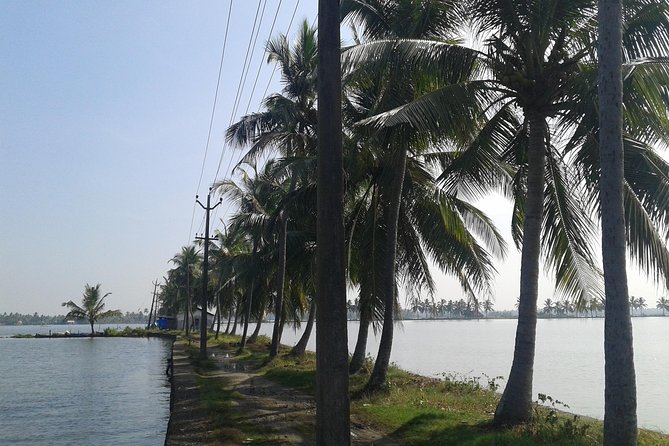
- Fish farms and crab collection show how the coastal supply chain works
- Coconut oil production from drying to fresh oil is a full, real process, not a quick stop
- Traditional fishing nets and handmade boats give context to how fishing happens day to day
- Coir factory work by village women explains the making of mats and door mats
- Spice market time near Fort Kochi closes the day with local shopping and flavors
A 4-hour village loop with real work at every stop
This is the kind of Kochi experience that doesn’t ask you to guess what people do for a living. You’re shown the working side of village life: catching and storing seafood, processing coconuts, turning coconut fiber into coir, and trading spices and everyday goods. The goal is simple—help you connect the dots between Kerala’s coast, its materials (coconut), and its markets.
The best part for most people is that it’s not just one “attraction.” It’s a chain of workshops and trades, so your brain stays busy in a good way. You get to see how several industries overlap: fishing happens near the water, coconuts get processed farther inland, and products end up in markets later.
For a 4-hour format, the pace is tight. You’ll get short looks and watch processes in motion, but you won’t have hours at one site. If you love long craft demonstrations and deep questions for hours, you might want a slower add-on day. If you want a broad, grounded picture fast, this hits the sweet spot.
Pickup from Fort Kochi and why having a driver matters
The day starts in Fort Kochi at 9:00 am, and the activity ends back at the meeting point. If your hotel is in the pickup list, you’ll get that added convenience up front. That matters more than it sounds. Kochi village areas can feel spread out, and these kinds of stops aren’t always clustered in a neat tourist line.
You’ll travel by air-conditioned car/van and, depending on the option, also use a tuk-tuk. That mix is practical: the car handles longer jumps, while smaller transport helps you reach working areas without turning the day into a transportation puzzle.
Also, this tour is private, so it’s only your group. That generally makes it easier to ask questions, move together, and keep the day from turning into a shuffle through crowds.
More slow village days around Kumbalangi and the backwater hamlets.

Fish farms and mud crabs: seeing the coast’s real workflow
One of the most memorable sections is the coastal start: you stop near fish farms to watch different methods of catching fish. This isn’t framed as a performance. It’s about the mechanics—where activity happens, how people work around water, and how daily fishing connects to export and storage.
Next comes a crab-focused stop described as a crab store where live mud crabs are collected for exporting. If you’re curious about supply chains, this is your “oh, that’s how it works” moment. You’ll see the reality behind a product you might only ever encounter as a dish on a plate.
This part also sets the tone for the entire day. Once you understand that coastal work is coordinated and time-sensitive, the later visits—nets, boats, processing—make more sense. You start to notice the logic behind the tools and the places.
Practical consideration: wear shoes you don’t mind getting a little dirty. Coastal areas and working sites can be uneven, and you’ll be moving between points.
Coconut oil processing: from drying to fresh oil
Then you shift from the water to coconut. The tour includes a visit to a coconut oil factory where you watch coconut drying, processing, and the making of fresh coconut oil. That sequence matters. Coconut oil isn’t just something that appears. The process depends on drying first, then processing in stages.
If you’ve ever wondered why some coconut oil tastes different or behaves differently in cooking, this stop helps you connect those differences to the steps behind production. You’re not asked to memorize everything, but the experience gives context—why the raw material needs prep, why processing takes time, and why a factory like this becomes a hub for the surrounding area.
Watch how people move around the materials, and pay attention to the workflow. Even in a short tour window, you’ll see that efficiency is the real “technology.” It’s not about flashy machines; it’s about repeated steps done correctly.
- Adventure Tuk Tuk Tour in kochi – A Private Guided Tour with Hotel Pick up
★ 5.0 · 579 reviews - Cochin: Backwater Village Eco Boat Cruise with Lunch
★ 4.8 · 502 reviews - Full Day Backwater Village Punting Boat Cruise
★ 5.0 · 393 reviews - Kochi: Private Tuk-Tuk City Tour with Hotel Pickup
★ 4.8 · 292 reviews - 5 Days Luxury Kerala Tour with Houseboat Experience
★ 4.5 · 279 reviews - Half Day Tuk Tuk Tour in Kochi – Private Tour with Hotel Pick up
★ 5.0 · 278 reviews
Traditional fishing nets and handmade boat building
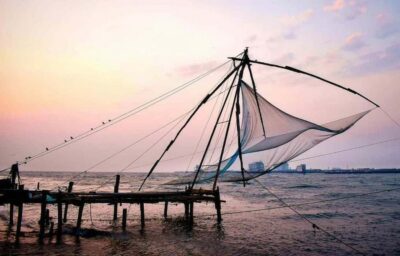
Back out on the fishing theme, you head toward the fishing nets to explore the traditional way of catching fish using smaller Chinese fishing nets. These nets are part of a long-standing coastal tradition, and seeing them in context helps you understand how local fishermen adapt gear to their waters and routines.
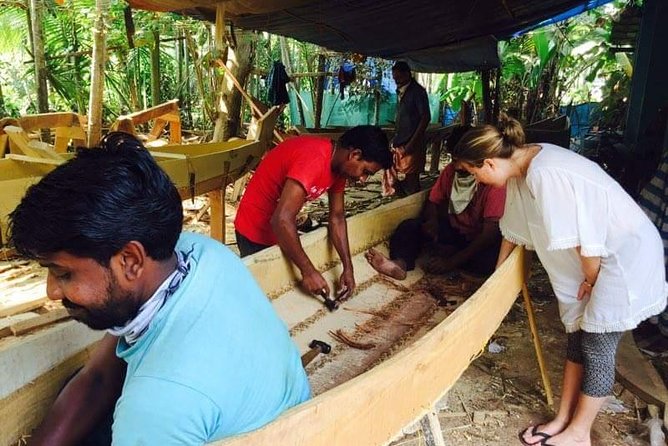
Then you get an especially striking craft stop: the art of making hand-made fishing boats. This is the kind of thing that feels like magic until you see the labor behind it. You’re basically getting an up-close look at how boats are designed for function—handling local conditions, supporting work, and lasting through repeated use.
Why this works: fishing isn’t only about catching. It’s also about building and maintaining the tools of the trade. When you pair the nets with boat-making, you leave with a clearer picture of the whole cycle—gear and craft as part of everyday livelihood, not just scenery.
Tip for your visit: go in with a simple goal—look for what’s made to handle saltwater wear and repeated labor. Even if you don’t know boat terminology, you’ll spot what builders prioritize.
Coir factory visit: why floor mats and door mats have a backstory
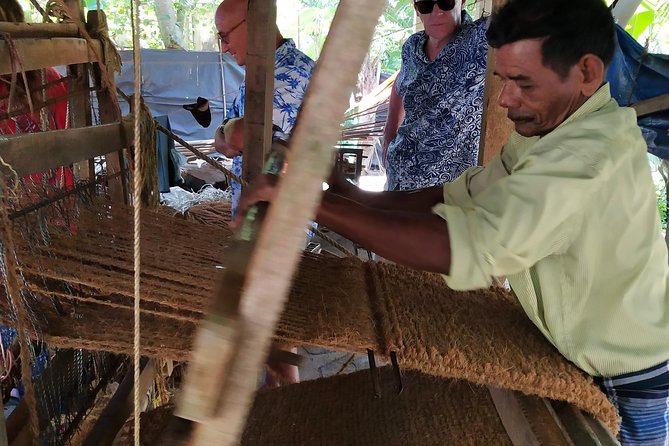
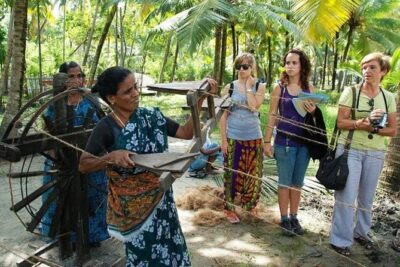
Next comes the coir factory, where you watch village women make natural coir used for floor mats and door mats. Coir is one of those products that seems simple on the shelf but involves a real craft process.
What I like about this stop is the human scale. You see coordinated work and skill, and you can connect the finished products you might buy later to the hands and steps that create them. It’s also a useful counterpoint to the fishing focus earlier in the day. You get a different kind of labor: fiber work instead of water work.
Coir making is also a great lens for understanding how local economies diversify. When something depends on one season or one environment, communities often rely on other materials and other timeframes. Coconut fiber offers that second track, and the factory ties it to daily life and sales.
Practical note: this stop is often about watching. Don’t expect it to feel like a big museum. You’ll learn best by watching carefully and asking basic questions through your local expert.
Fort Kochi spice markets and craft shops to close the day
At the end, you head toward Fort Kochi for spice markets, a craft shop, and a local market. This is where the day shifts from watching production to seeing trade. After you’ve seen fishing, coconut processing, and coir making, the spice and craft stops feel like a natural next step: goods travel from local work sites to places where people buy and sell.
You’ll also get a chance to do a little browsing—perfect if you want practical souvenirs rather than plastic trinkets. Since souvenir photos and items may be available to purchase, decide early what kind of keepsakes you want.
If you’re picky about shopping time, keep expectations realistic. This portion isn’t an all-day market session; it’s a tidy wrap-up that lets you sample the vibe and buy a few things if they match your taste.
Price and what $25 really buys you
At $25.00 per person, this tour can be good value—mostly because it bundles a lot of working places into one day. You’re paying for more than entry stops. You’re paying for:
- Transportation between dispersed sites without you needing to navigate
- A driver/local expert who helps connect what you’re seeing to how the trades work
- Bottled water to keep you comfortable during a full run
- A private format where your group stays together
The value gets even clearer when you compare it to DIY costs. If you try to piece this together alone, you’ll pay for multiple rides and still might miss the right workshops at the right time. Here, the day is designed to flow from one trade to the next.
What’s not included is lunch, so factor that in. Also, souvenir photos are available for purchase, but they’re optional. If you eat after the tour (or plan a light snack beforehand), the $25 price feels more straightforward.
One more point: the tour is offered with group discounts, and it’s booked fairly far in advance on average. If your dates are fixed, don’t wait too long.
What to pack, and how to time your day
This operates in all weather conditions, so plan for variable comfort. Dress appropriately for the day’s rhythm. Since you’ll be moving between working areas, prioritize practical clothing and shoes over sandals with no grip.
A simple packing list:
- Comfortable shoes for walking and uneven surfaces
- A light layer if the morning feels cool
- Water is provided, but you might still prefer a small extra bottle
- A camera ready for close-up work scenes
Also, keep your schedule mindset. You’re seeing multiple industries in a short window, so don’t treat this like a single “deep research project.” It’s a fast, grounded orientation to Kochi’s village economy.
Who should book this tour, and who might want another plan
You’ll enjoy this most if you like real work sites, you’re curious about how local products are made, and you prefer practical cultural learning over only sightseeing. It fits couples, solo travelers, and small groups who want structure but also want to get off the usual path.
It’s also a strong choice if you want to understand Kerala’s everyday industries without planning transport between each location. The driver is doing the heavy lifting.
You might want a different type of tour if:
- You want lots of free time at markets or for long stays at one workshop
- You get uncomfortable around active work environments
- You’re hoping for a full meal included in the price
Should you book Kochi Village Life Experience?
I’d book it if you want a well-rounded Kochi day that focuses on how people actually live and work. The mix—fish farms, coconut oil making, coir production, fishing nets, boat building, then spice markets—gives you variety without feeling random.
Skip it only if you want slow travel, long market wandering, or a meal included. If that sounds like you, you’ll probably feel a bit rushed.
If your ideal vacation day is about watching the process, asking a few questions, and coming away with a clearer picture of what drives the local economy, this one earns its spot.
FAQ
What time does the tour start?
The tour starts at 9:00 am.
How long is the Kochi Village Life Experience tour?
It runs for about 4 hours.
Is hotel pickup included?
Hotel pickup and drop-off are included for selected hotels. If you’re not in the pickup zone, you’ll meet at the Fort Kochi start area.
Where does the tour start and end?
It starts in Fort Kochi, Kochi, Kerala, India, and ends back at the meeting point.
What stops are included during the tour?
You’ll visit fish farms and a crab store for live mud crabs, a coconut oil factory, a stop by the fishing nets, a place showing handmade fishing boats, a coir factory, and then go toward Fort Kochi spice markets, a craft shop, and a local market.
Is lunch included?
No, lunch is not included.
What transportation will you use between locations?
You’ll travel by air-conditioned car/van and tuk-tuk depending on the options.
Is this tour only for my group?
Yes. This is a private tour/activity, and only your group participates.
What if the weather is bad?
It operates in all weather conditions. If it is canceled due to poor weather, you’ll be offered a different date or a full refund.
More Tour Reviews in Kochi
- Adventure Tuk Tuk Tour in kochi – A Private Guided Tour with Hotel Pick up
★ 5.0 · 579 reviews - Cochin: Backwater Village Eco Boat Cruise with Lunch
★ 4.8 · 502 reviews - Full Day Backwater Village Punting Boat Cruise
★ 5.0 · 393 reviews - Kochi: Private Tuk-Tuk City Tour with Hotel Pickup
★ 4.8 · 292 reviews - 5 Days Luxury Kerala Tour with Houseboat Experience
★ 4.5 · 279 reviews
More Kumbalangi Village Days
- Cochin: Backwater Village Eco Boat Cruise with Lunch
★ 4.8 · 502 reviews - Full Day Backwater Village Punting Boat Cruise
★ 5.0 · 393 reviews - Half Day Village Backwater Eco Country Boat Cruise :Group Tour from Fort Cochin
★ 4.5 · 126 reviews - Sunrise Cruise with Village Life and Local Food
★ 5.0 · 82 reviews - Sunset Cruise with Village Life and Local Food
★ 5.0 · 24 reviews
Not quite it? More Kochi tours and Kerala day trips


Kumbalangi Village Life Tours, compared.
 ★ 4.8Backwater Village Eco Boat Cruise with LunchFrom $33502 reviews
 ★ 5.0Full Day Backwater Village Punting Boat CruiseFrom $29393 reviews
 ★ 5.0Anakulam Wild Elephant Village life tour ( By Munnar Info)From $70344 reviews
 ★ 4.5Half Day Village Backwater Eco Country Boat Cruise :Group Tour from Fort CochinFrom $33126 reviews
 ★ 5.0Sunrise Cruise with Village Life and Local FoodFrom $6782 reviews
 ★ 4.3Kerala: Alappuzha River Cruise with Village WalkFrom $2125 reviews
 ★ 5.0Sunset Cruise with Village Life and Local FoodFrom $6724 reviews
 ★ 5.0Village Bike Tour & BirdwatchingFrom $3018 reviews
Browse the lists this tour appears in