

Reviewed · FORT KOCHI & MATTANCHERRY HERITAGE WALKS
Kochi Heritage walk for cultural immersion
The first pull is the nets. This Kochi heritage walk strings together Dutch, Portuguese, Chinese, and Jewish stories through Fort Kochi, from Cheena vala to the spice market. I like the way ordinary streets turn into history you can actually see.
Two things really land for me. First, the route gives you real places tied to specific eras, like Santa Cruz Cathedral Basilica and St Francis Church. Second, you get a small, included break with coffee or tea, which keeps a 3-hour walk from feeling like a slog.
One consideration: snacks aren’t included, and the walk ends at the spice market area, so plan your timing if you have dinner right after.
In This Review
- Key things to know before you go
- How this Fort Kochi Heritage Walk tells Kochi’s “many hands” story
- Starting at the Chinese Fishing Nets (Cheena vala): the landmark that anchors the whole walk
- Santa Cruz Cathedral Basilica and St Francis Church: Portuguese arrivals in plain sight
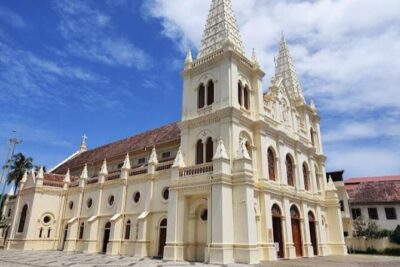
- Santa Cruz Cathedral Basilica
- Church of Saint Francis
- Dutch Cemetery Road: what 104 tombs can teach you about trade and power
- Fort Kochi Beach: a short sea break that resets your legs
- Cochin Spice Market: trade routes you can see and smell
- Price and what you actually get for $55
- Who this walk suits best in Kochi
- Guide storytelling: what makes it feel personal
- Should you book the Kochi Heritage Walk with 5 Senses Walks?
- FAQ
- How long is the Kochi Heritage Walk?
- What does the ticket include?
- Where does the walk start and end?
- Do I get a physical ticket?
- What’s the group size limit?
- Can I cancel and get a refund?
Key things to know before you go
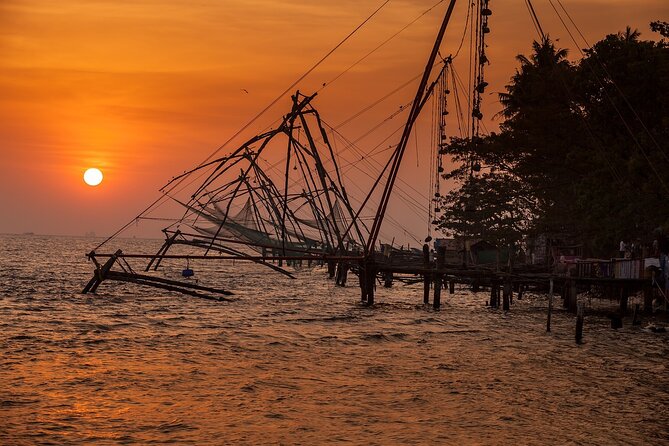
- Chinese fishing nets (Cheena vala) set the tone immediately, with a distinct Kochi landmark you can point to.
- Portuguese-era stops focus on dates and founders, from Pedro Álvares Cabral’s arrival to the Franciscan origins of St Francis Church.
- Dutch Cemetery Road gives you a visual story in stone, including 1724 origins and 104 epitaphs/tombs.
- Fort Kochi Beach is a quick reset with golden sand and Arabian Sea views.
- Cochin Spice Market ties global trade names to what you can see and smell right there.
- Up to 15 people means you can actually hear the guide without feeling lost in a crowd.
How this Fort Kochi Heritage Walk tells Kochi’s “many hands” story
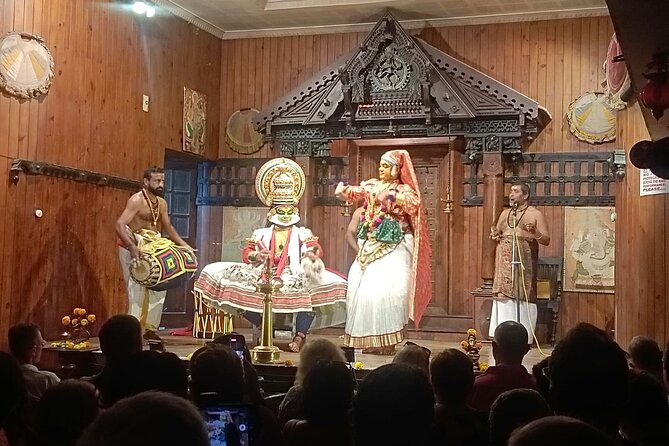
Kochi is one of those cities where multiple cultures didn’t just visit. They stayed long enough to leave marks you can track street by street. This walk is built to help you read those layers in a practical way, with stops that correspond to major cultural threads: Portuguese, Dutch, Chinese, and Jewish.
You’ll cover a compact stretch around Fort Kochi, with enough time at each location to understand what you’re looking at. The pacing is designed for comprehension, not just photos and moving on. And since the group is capped at 15, your guide can keep the group together while still answering questions.
Starting at the Chinese Fishing Nets (Cheena vala): the landmark that anchors the whole walk
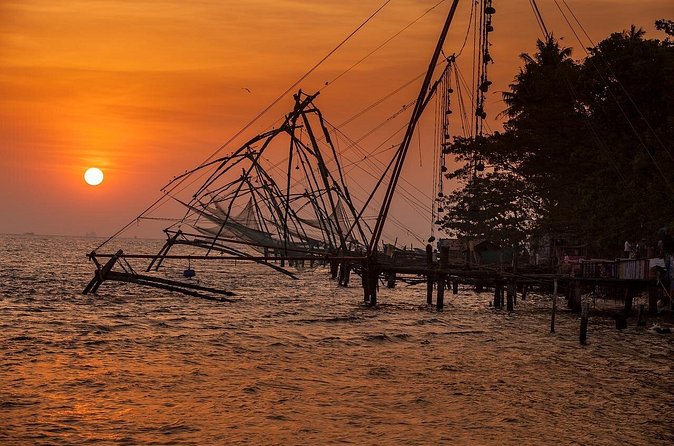
The tour begins at the Chinese Fishing Nets, locally called Cheena vala. These nets are more than a photo spot. They symbolize the region’s cultural exchange, introduced by Chinese traders, and they’re one of those Kochi details that help you immediately understand why the city feels global.
At this first stop, I’d use the time to take in two things: where the nets sit in relation to the waterfront, and how the style of the nets stands out compared to the typical image people expect from fishing in India. It’s a fast start, but it sets context for everything that follows.
Also, since the first stop is around the Fort Vypin area (near the starting point), you’re getting an early sense of how Fort Kochi relates to the surrounding coast. It makes later beach time feel like a continuation rather than a random add-on.
More walks around Fort Kochi and Mattancherry, past the Chinese nets and the Jew Town spice lanes.



Santa Cruz Cathedral Basilica and St Francis Church: Portuguese arrivals in plain sight
After the nets, the walk moves into Portuguese-era landmarks, and the guides’ focus is usually on cause-and-effect: who arrived, when, and how that changed the buildings and the community.
Santa Cruz Cathedral Basilica
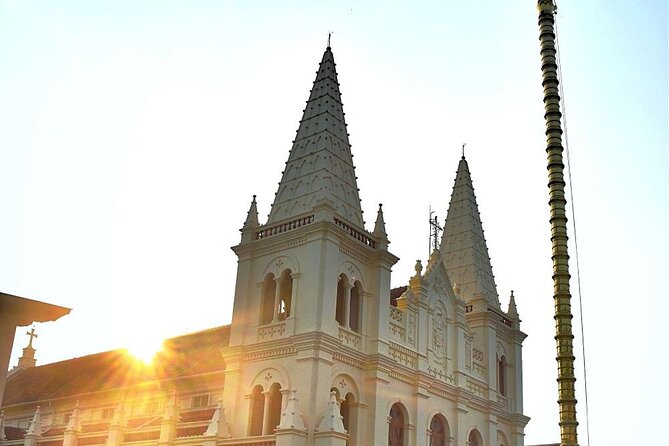
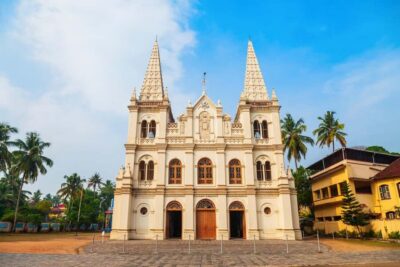
Santa Cruz Cathedral Basilica traces its beginnings to Portuguese missionaries arriving with the second Portuguese fleet under Pedro Álvares Cabral on 24 December 1500. That date matters. It gives you a clear timeline for why you’re seeing a Roman Catholic landmark in the middle of Kochi’s cultural crossroads.
In practical terms, spend your time here looking at what you’d normally skim past: the church’s presence as an anchor point in the neighborhood. This isn’t just architecture. It’s evidence of long-term influence, not a short visit.
More of the long trade-port history of Kochi.
- Jewish Heritage Tour of Cochin
★ 5.0 · 33 reviews - Stories of Jew Town: Guided Heritage Walk in Kochi
★ 4.7 · 30 reviews - Fort Kochi Heritage Day Cycling Tour
★ 4.2 · 26 reviews - Fortkochi Heritage Walking tour with a local guide
★ 4.4 · 19 reviews - Mattancherry Heritage Tour by The Kochi Heritage Project
★ 5.0 · 19 reviews - Heritage & Cultural Walk of Alleppey (Guided Walking Tour)
★ 4.5 · 15 reviews
Church of Saint Francis
Next is Church of Saint Francis, whose origins date back to 1503. It traces back to the Portuguese Franciscan friars who reached Kochi with Pedro Álvares Cabral. Early versions of the church used materials like wood and mud, which is a striking detail because it reminds you that these places evolved over time.
If you tend to like context, this stop is a strong one. You’re not only hearing about the church, you’re learning how the early structure worked in its environment. That makes the site feel more human and less like an untouchable monument.
Dutch Cemetery Road: what 104 tombs can teach you about trade and power
Dutch Cemetery Road is one of the stops that turns history into something visual and quiet. The Dutch Cemetery was established in 1724, and it contains 104 epitaphs and tombs. The tombs are made from granite and red laterite, which gives the road a distinct look compared with newer stonework you might see elsewhere.
This stop is about noticing the details that indicate identity and era. The tombstones record lives of Dutch and British nationals who once lived and worked in the region. When you understand that these are not generic graves, you start to see Kochi as a working port city with real people behind the dates.
A practical tip: bring a bit of patience here. This is the sort of stop where it helps to slow down, read what you can, and let the guide connect the dots. If you rush, you lose the reason the cemetery is included at all.
Fort Kochi Beach: a short sea break that resets your legs
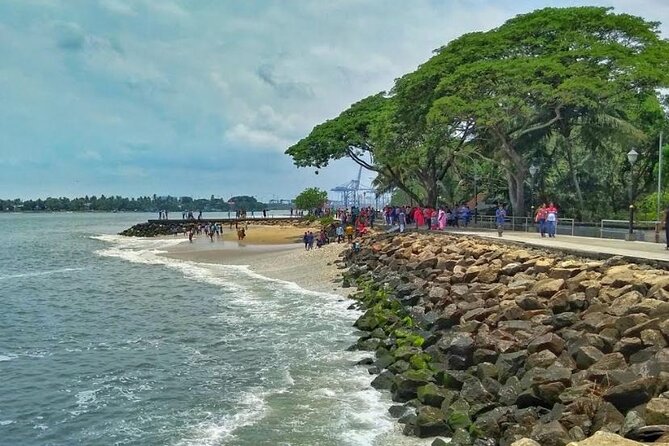
Fort Kochi Beach is the kind of pause that makes a walking tour feel doable. Expect a tranquil waterfront, golden sands, and the Arabian Sea. The goal isn’t a long beach day. It’s a breathing space between cultural stops.
I like this moment because it lets you absorb what the walk is teaching: Kochi’s identity isn’t only in churches and cemeteries. It’s also in the coast that helped make those exchanges possible. Even a short stop feels meaningful here because the tour began at fishing nets tied to trade and movement.
If the weather is hot, treat this stop like your mini recharge. Even just standing near the water, taking in the light and wind, can make the last leg—especially the market—feel easier.
Cochin Spice Market: trade routes you can see and smell
The final cultural beat is the Cochin Spice Market, with the tour ending at the village spice market area near Bazaar Rd in Mattancherry. Kochi’s spice role goes way back, and this is where you get the story connected to the goods.
The market is described as important since ancient times, drawing traders including Greeks, Romans, Chinese, and Arabs. That’s the kind of global reference you can keep in your head as you look at what’s on offer. It helps you understand that spices weren’t just a local product; they were part of an international system.
One practical reality: spice markets can be busy, and it helps to have a plan. The walk ends here, so you’re essentially turning your tour time into shopping time. If you want to buy, keep your expectations steady—think of it as browsing and choosing rather than speed-collecting.
Also, because snacks aren’t included, this is where you might naturally decide to eat after the walk, rather than relying on the tour for food.
Price and what you actually get for $55
At $55.00 per person for about 3 hours, this walk is priced like a guided “do it in one go” experience. You’re not paying extra for a rigid museum tour—you’re paying for a guide who can explain why each stop matters, and for a route that covers multiple heritage sites in a compact time window.
What’s included is straightforward:
- Guide
- Coffee and/or tea
- Entrance fee (listed as included)
The tour also uses a mobile ticket, which is a real convenience if you don’t want to worry about printouts. And with group discounts mentioned as a feature, the experience can be a better deal if you’re traveling with friends or family.
The group size cap (max 15) is part of the value too. You get the benefit of a group setting while still getting enough time for the guide to keep stories clear and audible.
Who this walk suits best in Kochi
This experience fits best if you like learning history through walking—where the buildings, roads, and landmarks do the heavy lifting. If you enjoy cultural comparisons (Portuguese vs. Dutch vs. Chinese influence, for example), this route is built for your curiosity.
It’s also a good match if you want an easy structure for your first visit. The route gives you a clean overview of Fort Kochi’s most distinctive cultural sites without requiring you to build an itinerary from scratch.
If you’re the type who gets impatient with slow stops, you might find the cemetery and churches require a bit more attention. Still, the stop lengths are set so the tour stays within a reasonable rhythm.
Guide storytelling: what makes it feel personal
One reason people rate this walk highly is the storytelling quality. Guides such as Alex and Rajesh are specifically mentioned for sharing engaging historical context and helping the full walk feel like a connected story rather than separate stops.
There’s also mention of smooth coordination involving Shan, which matters more than it sounds. When logistics work, the tour feels calm. You’re not waiting around or bouncing between plans. That’s especially helpful in older neighborhoods where finding the next stop can be trickier than it looks.
And since there’s an included coffee or tea break—and even a chance for local refreshments along the way—you don’t feel locked into a rigid, rushed schedule.
Should you book the Kochi Heritage Walk with 5 Senses Walks?
Yes, if you want a practical way to understand Fort Kochi’s cultural layers in 3 hours, with a guide who ties each place to a specific story. The mix of Chinese fishing nets, Portuguese churches, the Dutch Cemetery, a breather at the beach, and then the spice market makes for a route that feels complete without taking over your whole day.
If you hate walking or you need guaranteed snacks and a longer sit-down meal at set times, you may want to plan your food around it. Otherwise, this is a strong value option for making your Kochi day feel focused and meaningful.
FAQ
How long is the Kochi Heritage Walk?
It’s about 3 hours.
What does the ticket include?
The tour includes a guide, coffee and/or tea, and an entrance fee.
Where does the walk start and end?
It starts at the Chinese Fishing Nets (near Fort Vypin, Puthuvype, Kochi) and ends at the Village spice market at Bazaar Rd, Mattancherry.
Do I get a physical ticket?
No. You use a mobile ticket.
What’s the group size limit?
The tour has a maximum of 15 travelers.
Can I cancel and get a refund?
Yes. You can cancel for a full refund if you cancel up to 24 hours in advance. If you cancel less than 24 hours before the start time, the amount isn’t refunded.
More Kochi History Tours
- Kochi Tour Guide -A Heritage walking tour in Fort kochi and Mattancherry !
★ 5.0 · 143 reviews - Fort Cochin Heritage Tour by The Kochi Heritage Project
★ 5.0 · 85 reviews - Jewish Heritage Tour of Cochin
★ 5.0 · 33 reviews - Stories of Jew Town: Guided Heritage Walk in Kochi
★ 4.7 · 30 reviews - Fort Kochi Heritage Day Cycling Tour
★ 4.2 · 26 reviews
More Tour Reviews in Kochi
- Adventure Tuk Tuk Tour in kochi – A Private Guided Tour with Hotel Pick up
★ 5.0 · 579 reviews - Cochin: Backwater Village Eco Boat Cruise with Lunch
★ 4.8 · 502 reviews - Full Day Backwater Village Punting Boat Cruise
★ 5.0 · 393 reviews - Kochi: Private Tuk-Tuk City Tour with Hotel Pickup
★ 4.8 · 292 reviews - 5 Days Luxury Kerala Tour with Houseboat Experience
★ 4.5 · 279 reviews
More Fort Kochi Heritage Walks
- Fortkochi Sightseeing Tuk-Tuk Tour
★ 5.0 · 205 reviews - Private Fort kochi Tuk-Tuk Tour
★ 5.0 · 149 reviews - Half-Day Private Tuk Tuk Tour in Fort Kochi
★ 5.0 · 147 reviews - Kochi Tour Guide -A Heritage walking tour in Fort kochi and Mattancherry !
★ 5.0 · 143 reviews - Half Day Village Backwater Eco Country Boat Cruise :Group Tour from Fort Cochin
★ 4.5 · 126 reviews
Not quite it? More Kochi tours and Kerala day trips



Fort Kochi & Mattancherry Heritage Walks, compared.
 ★ 5.0Fortkochi Sightseeing Tuk-Tuk TourFrom $12205 reviews
 ★ 5.0Private Fort kochi Tuk-Tuk TourFrom $12149 reviews
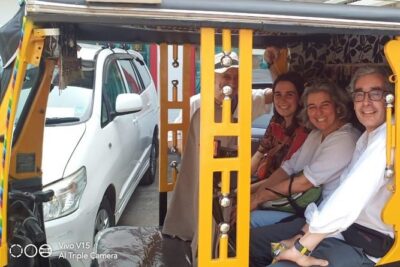 ★ 5.0Half-Day Private Tuk Tuk Tour in Fort KochiFrom $9147 reviews
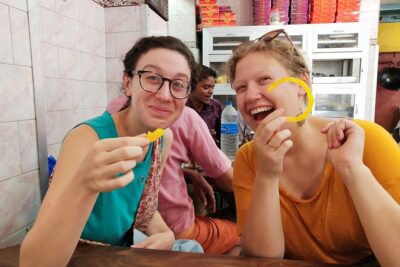 ★ 5.0Kochi Tour Guide -A Heritage walking tour in Fort kochi and Mattancherry !From $15143 reviews
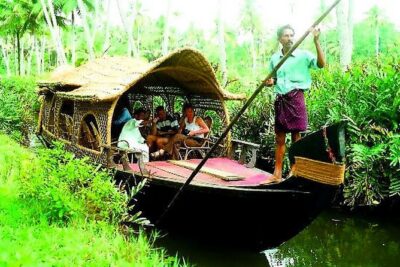 ★ 4.5Half Day Village Backwater Eco Country Boat Cruise :Group Tour from Fort CochinFrom $33126 reviews
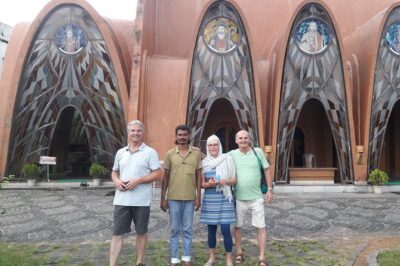 ★ 5.0Kochi Old City TourFrom $11104 reviews
 ★ 5.0Fort Kochi Local Sightseeing TourFrom $1294 reviews
 ★ 5.0Fort Cochin Heritage Tour by The Kochi Heritage ProjectFrom $2785 reviews
Browse the lists this tour appears in