
Reviewed · KATHAKALI & KERALA CULTURAL SHOWS
Kochi: Kathakali, Theyyam, and Kalaripayattu Evening Show
Three Kerala art forms hit you at once. I love the way Kathakali turns makeup into myth, and then you watch Kalaripayattu show real weapon skill right on stage. You’ll finish the night with Theyyam’s ritual trance feeling.
I find the English explanations a big help when the stories and symbols start flying. One consideration: the show isn’t suitable for wheelchair users.
In This Review
- Key things I’d watch for
- A Kochi evening built around three living traditions
- Hotel pickup in Kochi (and Ernakulam) makes it easy
- Kathakali makeup transformation: where myth becomes a face
- What to pay attention to during Kathakali
- Kalaripayattu (Kalari): martial art with control, speed, and weapons
- A safety-minded expectation
- Theyyam: ritual dance of the gods (and why it feels different)
- After the performance: a chance to connect
- Timing and what a 3-hour showcase really means
- Price and value: $11 for three performances plus transfers
- Comfort tips that actually help
- Who this is best for (and who might want to skip)
- Should you book this Kochi cultural evening show?
- FAQ
- How long is the experience?
- Where does hotel pickup happen?
- What performances are included?
- Is the tour guide available in English?
- Is flash photography allowed?
- Does this run daily?
- Is food included?
- Is it suitable for wheelchair users?
- Can I cancel for a refund?
Key things I’d watch for
- Kathakali makeup demo up close: See natural pigments and careful facial painting take performers from normal to character.
- Storytelling through facial acting: You’ll notice how eyes and expressions carry meaning fast, even without prior knowledge.
- Live percussion drives the pace: Drums and vocalists shape the tension and release throughout Kathakali scenes.
- Kalari performance shows discipline, not just tricks: Speed, balance, and weapon mastery all look controlled for a reason.
- Theyyam is ritual, not just dance: Expect trance-like intensity with chanting and drum rhythms.
- Photo time after the show: You can interact and take pictures, but flash photography isn’t allowed.
A Kochi evening built around three living traditions
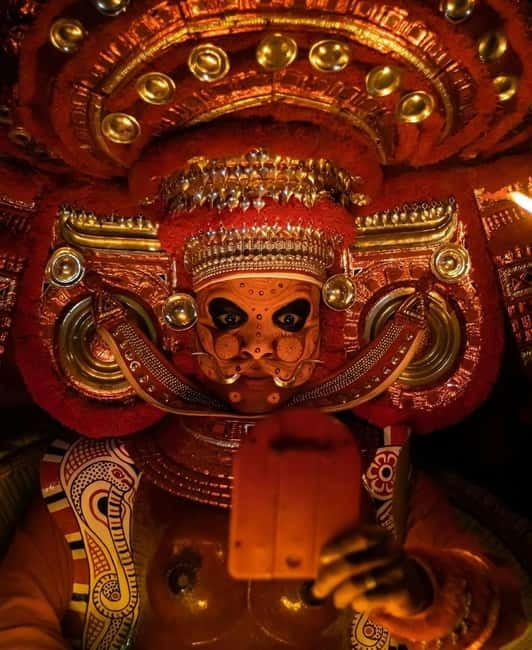
This is the kind of night that’s hard to replicate elsewhere in India, because you get three Kerala cultural styles in one sitting. Kathakali brings mythic drama to the stage with hyper-expressive acting. Kalaripayattu (Kalari) shows martial technique—body control, timing, and weapon handling. And Theyyam lands with a very different mood, more ritual than performance, with intense music and trance-like energy.
What makes this combo work is contrast. Kathakali is all about codified gestures, face, and voice. Kalari is fast, physical, and sometimes jaw-dropping. Theyyam feels sacred and surreal—like you’ve stepped into a different kind of time for a while.
Hotel pickup in Kochi (and Ernakulam) makes it easy
You start with round-trip transfers, either from Kochi or Ernakulam, depending on the option you choose. The ride is in an air-conditioned vehicle, and the whole point is to remove the usual evening hassle: finding the venue, handling transport back, and trying to coordinate tickets after a full day of sightseeing.
This matters because these shows are time-based. When you’re on vacation, “almost on time” can turn into “late, crowded, and stressed.” With pickup and a driver waiting afterward, you can show up when you’re supposed to—and leave when the show ends without hunting for a ride.
One more practical note: the operator provides English-language guidance. And there’s an opportunity to skip the ticket line, which can save a chunk of your patience.
More evenings of Kathakali, Theyyam and Kalaripayattu under the brass lamps.

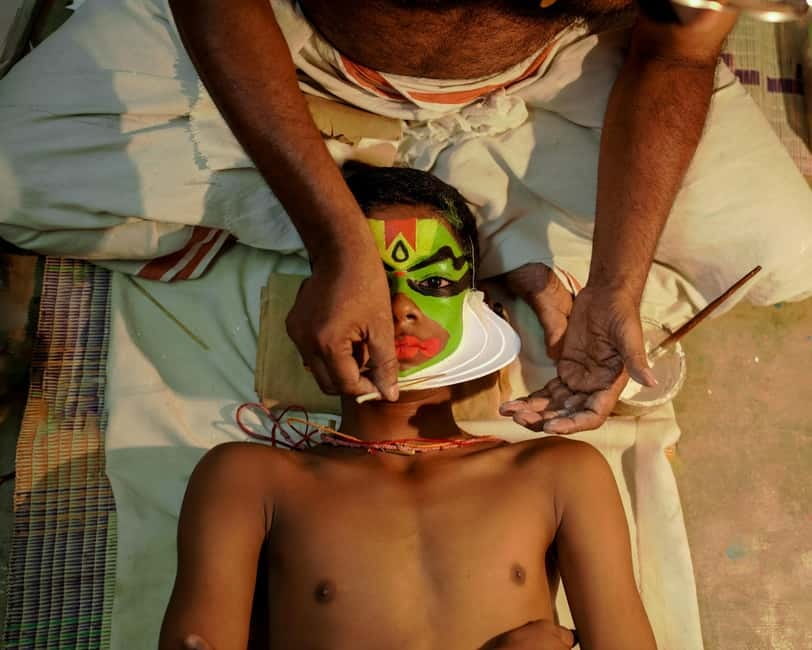
Kathakali makeup transformation: where myth becomes a face
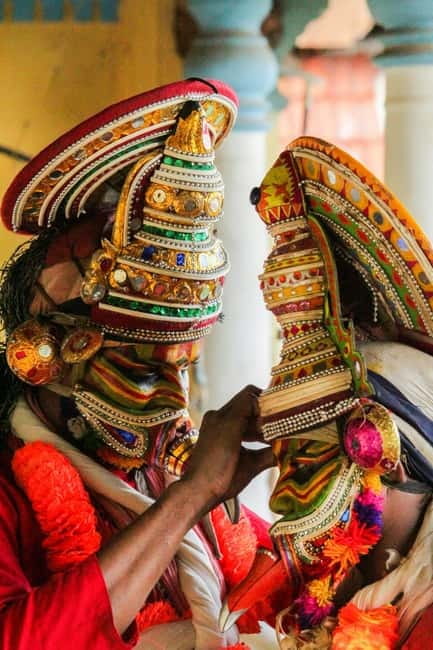
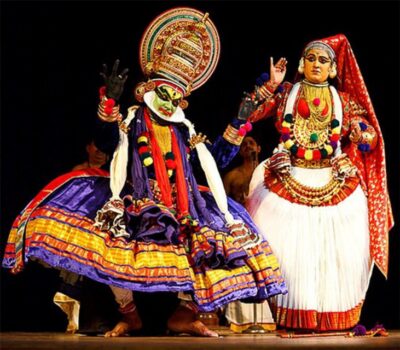
Kathakali usually begins with a makeup demonstration, and this is where the evening really earns its keep. Watching the application process changes how you see the performance. You don’t just look at a finished character—you understand that the face is made with intent: layered painting, pigments, and detailed work that turns a performer into an epic persona.
You’ll see how the transformation supports the acting. Kathakali relies on specific acting tools: mudras (hand gestures), expressive body lines, and facial movements designed to read like a language. The show uses exaggerated expressions known for emotional intensity, and the performers’ eyes do a lot of the storytelling.
Then the main performance brings the epic stories to life. You’re in the middle of scenes drawn from major Indian epics such as the Mahabharata and the Ramayana. The staging is dramatic—think characters, destiny, tension, and sudden shifts—amplified by live percussion and vocal accompaniment.
What to pay attention to during Kathakali
If you want the best “aha” moment, focus on three things:
- Eyes and brows: they often signal mood before the story line becomes obvious.
- Hands and gesture timing: mudras help you follow meaning even if you don’t know the language.
- Rhythm shifts: the live music makes action feel urgent and then resolves it.
Also, wear the right expectations. Kathakali isn’t subtle realism. It’s stylized theater, built to be read from the audience side of the room.
More of Kochi after dark, from dance lamps to the sea breeze.
- From Kochi: 2-Day 1-Night Alappuzha Private Houseboat Cruise
★ 4.9 · 49 reviews - Sunset Cruise with Village Life and Local Food
★ 5.0 · 24 reviews - 2-Night Private Taj Mahal and Agra Tour from Cruise Port
★ 5.0 · 20 reviews - Cochin: Full-day Backwater Tour with Lunch and Evening Tea
★ 4.8 · 9 reviews - Kochi: 1 Night Alappuzha Backwaters House Boat Cruise Tour
★ 4.7 · 6 reviews - Half Day Village Sunset Eco House Boat Tour-From Cruise Terminal
★ 5.0 · 5 reviews
Kalaripayattu (Kalari): martial art with control, speed, and weapons
After Kathakali’s dramatic acting, Kalari hits like a reset. Kalaripayattu—often called the mother of all martial arts—is presented as a live Kalari performance that highlights agility, strength, and precision.
The performance focuses on controlled combat techniques, weapon mastery, and acrobatic movement. It’s not just “watch these people flip.” The point is discipline: how trained fighters move with speed while keeping technique tight.
This is one of the most thrilling parts of the night because it’s physical in a direct way. Even without any background, you can spot the difference between random stunts and practiced sequences. The performers look coordinated, and the pacing keeps changing so you stay alert.
A safety-minded expectation
The show includes combat and weapon work, and it’s inherently a high-skill, high-risk tradition. The good sign here is that the performers are trained professionals who demonstrate technique in a performance format.
If you’re sensitive to loud sounds or fast action, sit where you can keep a comfortable view. (The music and intensity are part of what you’re paying for.)
Theyyam: ritual dance of the gods (and why it feels different)
Theyyam is where the evening turns surreal. This ritualistic dance form originates in North Kerala, and in a live stage setting you still feel the spiritual intent. Performers dress in elaborate headgear and vivid costumes, then embody a deity through movement, face makeup, and expression.
The show uses hypnotic drumbeats and ritual chants. That combination matters. It builds a trance-like atmosphere that’s not about entertainment in the modern, “clap when it’s funny” sense. The performer’s presence feels powerful and otherworldly.
From there, the performance can feel intense in a good way. The energy is direct. It’s the kind of moment where people stop talking and just watch, because the body language has meaning and the rhythm pulls you along.
After the performance: a chance to connect
Once the final segment ends, you get time to interact with performers and take photographs. This is one of the better “value add” moments—seeing the art forms as practiced disciplines, not just stage illusions.
Photography is allowed, but flash photography is not permitted. If you’re the type who takes night photos, plan on using normal camera settings without flash.
Timing and what a 3-hour showcase really means
The total experience can run 1–7 hours depending on your pickup time and the schedule for that day. The main theatre showcase is described as about 3 hours, but the evening effectively “starts earlier” because transfers and the makeup portion take time.
On many schedules, you’ll likely see a makeup application/preparation period in the late afternoon (some show timings run around 5–6 pm), then the main performance follows (often around 6–8 pm). Even if the exact times shift, the rhythm is usually the same: prep first, then the show.
So here’s my practical advice: don’t plan a tight dinner afterward. Let the night breathe. You’ll want time to process what you just watched, and you’ll probably be curious enough to linger during the performer interaction.
Price and value: $11 for three performances plus transfers
At around $11 per person, this is strong value for what you’re getting. You’re not just paying for one show. You’re paying for a full evening program that includes:
- Kathakali makeup demonstration and performance
- Kalaripayattu (Kalari) live martial performance
- Theyyam ritual dance performance
- English-language guidance
- Round-trip transfers from your hotel in Kochi or Ernakulam (depending on the option)
- A chance to interact and take photos
- Skip-the-ticket-line support
Most separate cultural activities cost more once you factor in transport and the likelihood you’ll need to line up tickets at the last minute. Here, the bundle makes your logistics simpler and your evening more packed with “real stuff,” not just a single highlight.
If you’re short on time in Kochi, this kind of multi-art evening can be a smart way to sample major Kerala traditions without turning your whole trip into a quest for venues.
Comfort tips that actually help
A few small choices make a noticeable difference:
- Wear comfortable clothes. You’ll be sitting and watching for a while, and you may be doing a bit of moving during pickup/transfer and interaction time.
- Bring your camera mindset. Photography is allowed, but no flash. If you rely on flash, you’ll have to adjust.
- Go in open-minded. Kathakali is theatrical, Kalari is athletic, and Theyyam is ritual. Treat them as different languages, not different levels of “good.”
And if you’re traveling with friends or family, this is one of those nights where different people gravitate to different segments—then you all end up comparing notes afterward like you just watched three sides of the same culture.
Who this is best for (and who might want to skip)
This experience is ideal if you:
- Want a high concentration of Kerala culture in one evening
- Like stage performances that use strong visuals and sound
- Appreciate live art forms with deep technique behind them
- Prefer an English-guided format so you understand what you’re seeing
It may not be ideal if you:
- Need wheelchair accessibility (this activity isn’t suitable for wheelchair users)
- Are highly averse to intense music and ritual chants
- Only want a very short activity—this can take a few hours with transfers
Should you book this Kochi cultural evening show?
If you want one evening that gives you Kathakali drama, Kalari discipline, and Theyyam ritual intensity—without making transportation a problem—then yes, I’d book it. The best part is the structure: pickup, English guidance, makeup prep, performances, and a return drive, all tied together.
My only “pause” is accessibility. If that’s a concern for you, don’t force it—look for an alternative format that works for your needs.
If you’re good to go, this is the kind of show where you leave feeling like you witnessed more than a performance. You watched three traditions practice their craft in front of you.
FAQ
How long is the experience?
The activity duration is listed as 1–7 hours, and it includes a 3-hour traditional dance show segment at the venue.
Where does hotel pickup happen?
You have round-trip transfers from your hotel in Kochi or Ernakulam, depending on the option you select. Pickup is provided by an air-conditioned vehicle.
What performances are included?
You’ll see Kathakali (including a makeup demonstration if selected), Kalaripayattu (Kalari), and Theyyam.
Is the tour guide available in English?
Yes. English-language guidance is provided.
Is flash photography allowed?
No. Flash photography is not allowed, but photography is otherwise allowed.
Does this run daily?
Yes, the tour is available daily.
Is food included?
No. Food and drinks are not included.
Is it suitable for wheelchair users?
No. The experience is not suitable for wheelchair users.
Can I cancel for a refund?
Yes. It offers free cancellation up to 24 hours in advance for a full refund.
More Kochi Evening Tours
- From Kochi: 2-Day 1-Night Alappuzha Private Houseboat Cruise
★ 4.9 · 49 reviews - Sunset Cruise with Village Life and Local Food
★ 5.0 · 24 reviews - 2-Night Private Taj Mahal and Agra Tour from Cruise Port
★ 5.0 · 20 reviews - Kochi: Kathakali Evening Dance Show w/ Dinner & Transfer
★ 4.2 · 10 reviews - Cochin: Full-day Backwater Tour with Lunch and Evening Tea
★ 4.8 · 9 reviews
More Tour Reviews in Kochi
- Adventure Tuk Tuk Tour in kochi – A Private Guided Tour with Hotel Pick up
★ 5.0 · 579 reviews - Cochin: Backwater Village Eco Boat Cruise with Lunch
★ 4.8 · 502 reviews - Full Day Backwater Village Punting Boat Cruise
★ 5.0 · 393 reviews - Kochi: Private Tuk-Tuk City Tour with Hotel Pickup
★ 4.8 · 292 reviews - 5 Days Luxury Kerala Tour with Houseboat Experience
★ 4.5 · 279 reviews
More Kathakali & Kerala Shows
- Skip the Line: Kerala Cultural Show Ticket
★ 5.0 · 27 reviews - Kochi: Kathakali Evening Dance Show w/ Dinner & Transfer
★ 4.2 · 10 reviews - Colors of Kochi: City Tour & Kathakali Experience
★ 5.0 · 8 reviews - Kochi: Kathalki Theatre and Dinner Experience
★ 3.9 · 8 reviews
Not quite it? More Kochi tours and Kerala day trips




Kathakali & Kerala Cultural Shows, compared.
 ★ 5.0Skip the Line: Kerala Cultural Show TicketFrom $2027 reviews
 ★ 4.2Kathakali Evening Dance Show w/ Dinner & TransferFrom $6010 reviews
 ★ 3.9Kathalki Theatre and Dinner ExperienceFrom $628 reviews
 ★ 5.0Colors of Kochi: City Tour & Kathakali ExperienceFrom $758 reviews
Browse the lists this tour appears in